How to Store Coffee Beans Properly and Keep Them Fresh Longer
Fresh coffee is fragile. The same beans that smell rich and sweet on roast day can turn flat, papery, or bitter if they sit in the wrong place for too long. The good news is that coffee storage is simple once you understand what beans are trying to avoid.
Coffee beans hate four things: oxygen, heat, moisture, and light. Control those, and you can keep more of the flavor and aroma you paid for.
Learning how to store coffee beans properly does not require fancy gear or a complicated routine. A good container, the right location, and a few smart habits can make every bag taste better from the first scoop to the last.

What makes coffee beans lose freshness
Coffee beans are not like dried pasta or rice. They are roasted seeds full of aromatic compounds and oils. After roasting, those compounds slowly change. Some fade, some oxidize, and some escape into the air.
That process is normal. Storage cannot stop coffee from aging, but it can slow the decline.
The biggest freshness thieves are easy to remember.
Freshness factor | What it does to coffee | Best protection |
Oxygen | Makes flavors taste stale, dull, or cardboard-like | Airtight container |
Heat | Speeds up aging and weakens aroma | Cool storage spot |
Moisture | Damages beans and can create off flavors | Dry location |
Light | Breaks down delicate compounds over time | Opaque container or dark cabinet |
Whole beans stay fresh longer than ground coffee because less surface area touches oxygen. The moment coffee is ground, aroma escapes faster. That is why grinding right before brewing is one of the easiest ways to improve flavor.
If there is one rule to follow, make it this:
Store whole beans in an airtight, opaque container in a cool, dry, dark place.
That single habit solves most coffee freshness problems.
Choose the right container for coffee beans
The container matters more than many people think. A half-used coffee bag rolled over with a loose clip is better than nothing, but it is not ideal for long-term freshness.
The best coffee bean storage container keeps air out, blocks light, and does not hold odors from other foods.
Use an airtight container
An airtight coffee container is the first upgrade to make. Oxygen causes stale flavors, so a tight seal matters. Look for a container with a silicone gasket, locking lid, screw top, or clamp closure.
Good options include:
Ceramic canisters with gasket lids
Stainless steel coffee canisters
Glass jars kept inside a cabinet
Vacuum-seal coffee containers
The original coffee bag, if it has a strong resealable zipper and one-way valve
A one-way valve on a coffee bag lets carbon dioxide escape without letting much air in. This is useful for freshly roasted beans, especially during the first few days after roasting.
Pick opaque over clear
Clear glass jars look beautiful on a counter, but they expose beans to light. If you love glass, store the jar in a cabinet or pantry. For countertop storage, choose ceramic, stainless steel, or another opaque material.
Light exposure does not ruin coffee instantly, but daily sunlight or bright kitchen lighting can speed up flavor loss. Beans stored in a clear jar near a window will fade faster than beans tucked away in a dark cupboard.
Avoid containers that smell like food
Coffee absorbs odors. If a container once held spices, garlic snacks, herbal tea, or flavored coffee, it may pass those aromas into your beans.
Before reusing a jar, wash it well and let it dry completely. Smell it before filling. If the container still has a scent, choose another one.

Store coffee in the right location
A great container can only do so much if it sits in a bad location. Coffee lasts longer in a stable environment.
The ideal storage spot is:
Cool
Dry
Dark
Away from strong smells
Away from heat sources
A pantry, cupboard, or drawer usually works well. The back of a cabinet is often better than the counter, especially if the kitchen gets sunny.
Keep beans away from heat
Heat speeds up staling. Avoid storing beans near:
The stove
The oven
A toaster oven
A sunny window
The top of the refrigerator
A cabinet directly above appliances
The top of the fridge often feels convenient, but it can be warmer than the rest of the kitchen. The same goes for cabinets above the stove. Heat rises, and coffee notices.
Room temperature is fine as long as the spot stays fairly cool and consistent. A climate-controlled kitchen or pantry is better than a garage, laundry room, or enclosed porch where temperatures swing.
Protect coffee from humidity
Moisture is one of coffee’s worst enemies. Beans are porous, and humidity can make them age unevenly or pick up stale flavors. In extreme cases, damp storage can ruin a bag.
Do not store coffee under the sink, near a dishwasher, next to a kettle, or by a steamy espresso machine. These places often have more moisture than you expect.
After scooping beans, close the container right away. Leaving the lid off while water boils or while brewing creates more exposure than necessary.
Keep coffee away from strong odors
Coffee can take on surrounding smells. That is bad news if it sits next to onions, spices, cleaning supplies, or scented candles.
A pantry shelf with baking ingredients may be fine. A shelf next to curry powder, dried chiles, or garlic seasoning is less ideal. If the area has a strong smell when you open the door, your coffee should live elsewhere.
Should coffee be refrigerated or frozen
This is where coffee storage advice gets confusing. The short version is simple: do not refrigerate daily coffee beans. Freezing can work, but only in specific situations.
Do not store daily coffee in the refrigerator
The refrigerator seems cool and dark, but it has two big problems: moisture and odors.
Every time you remove coffee from the fridge, condensation can form as the beans warm up. That moisture is not good for flavor. The fridge also contains strong smells from leftovers, cheese, produce, and sauces. Coffee can absorb those smells over time.
So if you have ever wondered, should coffee be refrigerated, the answer is usually no.
For everyday use, a sealed container in a cool pantry is better.
Freeze coffee only when you need longer storage
Freezing can help if you bought more coffee than you can drink in a few weeks. The key is to freeze it once, keep it sealed, and avoid repeated thawing.
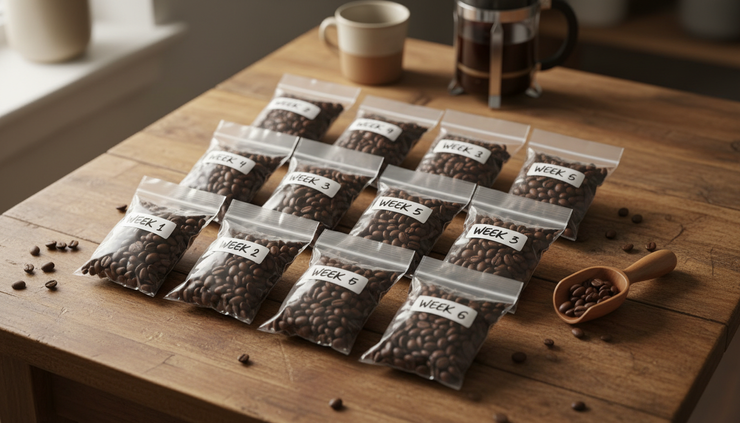
The best way to freeze coffee beans is to divide them into small portions. Each portion should hold enough for a few days or a week. Seal each portion in an airtight bag or container, removing as much air as possible.
When you need a portion, take it out and let it come to room temperature before opening. This helps avoid condensation on the beans.
Freezing works best for whole beans, not ground coffee. Ground coffee has more surface area and loses aroma quickly even with careful storage.
A practical answer to should coffee be frozen is this: freeze extra unopened or portioned beans if needed, but keep your daily supply at room temperature.
Buy and use coffee in freshness-friendly amounts
Storage starts before the beans reach your pantry. Even the best container cannot fully rescue old coffee.
For most home brewers, the smartest move is to buy only what you reasonably expect to drink in a few weeks. If possible, check the roast date rather than relying only on a best-by date.
Coffee often tastes best after it has had a short rest after roasting. Very fresh coffee releases carbon dioxide, which can affect brewing. After that resting period, flavor gradually softens. The exact timing varies by roast level, bean, and brewing method, but smaller purchases are almost always easier to keep fresh.
If a large bag is a better value, divide it when you get home:
Keep a small amount in your daily container.
Seal the rest tightly.
Freeze extra portions if you will not use them soon.
Open only one portion at a time.
This creates less air exposure and helps each brew taste closer to the first cup from the bag.
Habits that preserve flavor and aroma
Good storage is not only about where the beans sit. Daily habits add up.
Grind only what you need
Grinding releases aroma fast. That wonderful smell after grinding is also flavor leaving the beans. For the best cup, grind right before brewing.
If convenience matters, grinding the night before is still better than buying a large bag of pre-ground coffee and using it for weeks. Keep pre-ground coffee in the same conditions as beans, airtight, cool, dark, and dry.
Use a clean scoop
A scoop with moisture, sugar, flavored syrup, or old coffee oils can affect the beans in your container. Keep your coffee scoop dry and clean. Do not leave it buried in the beans if it makes the lid harder to seal.
Close the container quickly
Each opening lets fresh air into the container. You do not need to rush, but avoid leaving the lid open while you prepare the brewer.
Scoop what you need, then reseal the container.
Keep flavored coffee separate
Flavored beans can perfume a container for a long time. If you enjoy vanilla, hazelnut, or seasonal flavored coffee, store it in a separate container from unflavored beans.
The same rule applies to dark, oily beans. They can leave oils behind, so clean the container before switching to a lighter roast.
Clean storage containers regularly
Coffee oils build up on container walls. Over time, those oils can turn stale and affect new beans. Wash storage containers between bags or at least every few refills.
Let the container dry completely before adding beans. Even a small amount of water can cause problems.
Common coffee storage mistakes to avoid
Most stale coffee comes from small habits that seem harmless. Fixing them can make a big difference.
Avoid these mistakes:
Leaving beans in an open bag
Storing coffee in direct sunlight
Keeping coffee above the stove
Refrigerating the daily supply
Opening one large frozen bag again and again
Grinding the whole bag at once
Using a container that smells like spices or old coffee
Buying far more coffee than you can drink while it tastes fresh
The best way to store coffee beans, keep coffee beans fresh, improve coffee bean storage, choose an airtight coffee container, and follow practical coffee storage tips is to focus on coffee freshness rather than complicated rules.
That means protecting beans from air, heat, moisture, and light every day.

A simple coffee storage routine that works
Here is a reliable routine for keeping beans fresh without overthinking it.
Buy whole beans in amounts you can use within a reasonable time. Once home, keep the beans in their original valve bag if it reseals well, or transfer them to an airtight opaque container. Store that container in a cool, dry cabinet or pantry away from the stove, sink, dishwasher, and window.
If you bought extra coffee, portion it into airtight freezer-safe bags and freeze the portions you will not use soon. Keep one portion at room temperature for daily brewing. Grind only what you need, close the container right after scooping, and clean the container before adding a new bag.
That routine protects the qualities that make coffee enjoyable: the aroma when you open the container, the sweetness in the cup, the lively acidity, and the finish that does not taste stale.
Freshness does not require perfection. It just rewards consistency. Give your beans a dark, dry, airtight home, and they will give you better coffee for longer.


Comments