Best Coffee for Camping Fresh Roast Brewing Tips for Outdoor Adventures
Updated: Aug 15
The first cup of coffee at camp has a way of deciding the mood of the morning. If it is thin, stale, or gritty, even a perfect sunrise feels a little off. If it is rich, hot, and easy to make, the day starts with a small victory before the boots go on.
The best camp coffee is not always the fanciest coffee. It is coffee that fits the trip. A car-camping weekend near a lake leaves room for a hand grinder, French press, and enamel mugs. A long hiking route rewards lighter gear, faster prep, and fewer cleanup steps. The sweet spot is flavor, freshness, portability, and a brewing method that still works when your hands are cold and the picnic table is uneven.
Freshly roasted coffee is the best starting point for most camping trips because it brings more aroma and flavor to even simple brewing methods. Still, there is room for instant packets, pre-ground coffee, single-serve steeped bags, and rugged travel setups. The right choice depends on where you are going, how much weight you can carry, and how much ritual you want in the morning.

What makes coffee good for camping
Coffee for home can be all about precision. Coffee for camping needs a little more grit. It has to survive packing, changing temperatures, clumsy hands, and limited water. The Best coffee for camping is the one that tastes good after all of that.
Look for four traits.
Freshness
Fresh coffee has a fuller aroma and more character. Beans lose flavor over time, especially once ground. For most trips, coffee roasted recently and packed well will taste better than an old bag from the back of a pantry.
Portability
A fragile glass brewer or bulky kettle may be fine at home, but camp gear gets tossed, stacked, and carried. Good outdoor coffee gear should be light enough for the trip and sturdy enough to handle dirt, rain, and repeated packing.
Ease of preparation
Morning at camp is not always calm. Wind moves the flame. Water takes time to boil. Someone is looking for socks. A good method should be simple enough to repeat before breakfast without turning the site into a tiny café.
Flavor that suits the setting
Outdoor coffee often tastes best when it is bold, sweet, and balanced. Delicate floral notes can be lovely, but smoky air, cool mornings, and camp food tend to pair well with chocolatey, nutty, and caramel-like flavors.
On one fall trip, I brought a lightly roasted coffee that tasted bright and crisp at home. At camp, after a cold night and a breakfast of oatmeal, it felt sharp and thin. The next morning we brewed a medium roast with deeper sweetness, and it matched the place completely. Same campsite, same stove, much better mood.
Choose the right coffee type for your trip
The coffee itself matters before you ever choose a brewer. Think about how you are traveling, how much time you have, and how much cleanup you can handle.
Whole bean coffee gives the best flavor
Whole bean coffee keeps flavor longer because less surface area is exposed to air. If you can bring a small hand grinder, whole bean coffee for camping is the top choice for taste.
This works best for:
Car camping
Cabin stays
Short backpacking trips where coffee is a priority
Trips with more than one coffee drinker
A hand grinder adds weight, but it also adds aroma. Grinding beans while water heats is one of those camp rituals that makes even a simple morning feel earned.
Pre-ground coffee is practical and reliable
Pre-ground coffee is easier. No grinder, no extra step, no crank handle in the dark. The tradeoff is faster flavor loss, especially if the bag has been open for a while.
If using pre-ground coffee, buy it close to the trip and choose the grind size for your brewer. Coarse grind works for French press. Medium grind fits pour-over. Fine grind can work for moka pots, though it should not be powdery.
Pack only what you need for the trip, plus a little extra in case of spills or one more cup around the fire.
Instant coffee has earned a place in the pack
Instant coffee used to be the option people accepted, not the one they enjoyed. Today, there are better choices with cleaner flavor and less bitterness. It is still not the same as freshly brewed coffee, but it wins when weight, speed, and cleanup matter most.
Instant is great for:
Long hikes
Early trail starts
Bad weather mornings
Emergency backup coffee
I always like having one or two instant packets tucked into a food bag. They weigh almost nothing, and when rain hits sideways, the fastest cup is often the best cup.
Coffee bags and steeped coffee split the difference
Coffee bags work like tea bags. Add hot water, steep, and sip. They are cleaner than loose grounds and more flavorful than many instant options. They also pack flat, which makes them useful for hiking and overnight trips.
The downside is less control. You cannot adjust grind size, and strength depends on water amount and steep time. Still, they are one of the easiest camping coffee ideas for people who want real coffee without gear.
Pick a roast level that works outdoors
Roast level shapes flavor, body, and how forgiving the coffee feels at camp.
Light roast tastes bright but needs care
Light roasts often have fruit, citrus, or floral notes. They can be excellent, especially as pour-over coffee. At camp, they need more attention to grind size, water temperature, and brew time. If the extraction is off, they can taste sour or weak.
Choose light roast if you enjoy lively flavors and do not mind a slower brewing process.
Medium roast is the safest all-around choice
Medium roast is the easiest recommendation for most campers. It usually brings balance, sweetness, and enough body to handle simple brew methods. It also pairs well with classic camp breakfasts like pancakes, eggs, granola, and oatmeal.
If packing one bag for a mixed group, medium roast is a smart pick.
Dark roast brings bold flavor and less fuss
Dark roast has deeper, heavier flavors. Think cocoa, toasted nuts, smoke, or caramelized sugar. It can taste strong even when brewed with basic gear, which makes it useful in cold weather or when making coffee for a group.
The risk is bitterness. If the coffee is old or over-extracted, dark roast can taste flat and harsh. Freshness helps a lot here.
Freshness matters more than fancy gear
A simple brewer with fresh coffee will often beat expensive camping coffee gear paired with stale beans. Coffee starts losing aroma after roasting, and it loses it faster once ground. Oxygen, light, heat, and moisture all speed that up.
For fresher coffee at camp:
Buy coffee close to your departure date
Choose a roast date when available
Keep beans whole until brewing if possible
Pack coffee in an airtight container
Store it away from heat and direct sun
Avoid letting moisture into the bag
Freshly roasted coffee does not have to be complicated. A recently roasted medium roast, ground in the morning and brewed in a basic pour-over cone, can taste better than a technical setup with old beans.
If you need to grind at home, do it as close to the trip as possible. Pack the grounds in a sealed container, press out extra air from the bag if you can, and keep it closed between brews.
Match your brewing method to the adventure
There is no single best way to brew coffee while camping. Each method has strengths. The right one depends on weight, water, cleanup, and how much flavor control you want.
Brewing method | Best use | What to pack | Main tradeoff |
Instant coffee | Ultralight hiking and emergencies | Packets and mug | Less depth of flavor |
Coffee bags | Simple hiking coffee | Coffee bags and mug | Less control over strength |
Pour-over | Flavor-focused camp mornings | Cone, filters, kettle, mug | Needs patience and steady pouring |
French press | Car camping and groups | Press, coarse coffee, hot water | Bulky and messier cleanup |
AeroPress-style brewer | Strong, clean coffee | Brewer, filters, stirrer, mug | More small parts |
Moka pot | Rich coffee at base camp | Moka pot, fine-medium coffee, stove | Heavier and needs attention |
Pour-over is light and flavorful
A plastic or metal pour-over cone is a good balance of weight and taste. Use paper filters for easy cleanup. A slow, steady pour helps, but you do not need café-level precision.
Best with medium grind coffee and a kettle or pot with a controlled pour.
French press is comfortable for car camping
French press coffee feels generous at camp. It makes a full-bodied cup and can serve several people. Use coarse grounds, steep for about four minutes, then press slowly.
Cleanup is the main issue. Do not dump grounds near camp. Pack them out or dispose of them properly according to local rules.
AeroPress-style brewing is compact and clean
A compact press brewer makes strong, smooth coffee and is easier to clean than a French press. It is a favorite for campers who want quality without much bulk. Paper filters pack small, and the used coffee puck is easy to remove.
Moka pots bring cabin energy to camp
A moka pot makes a concentrated, rich cup. It is heavier, so it fits car camping, camper vans, and cabins better than backpacking. It also works best on a stable stove.
The sound of a moka pot bubbling on a quiet morning is hard to beat.
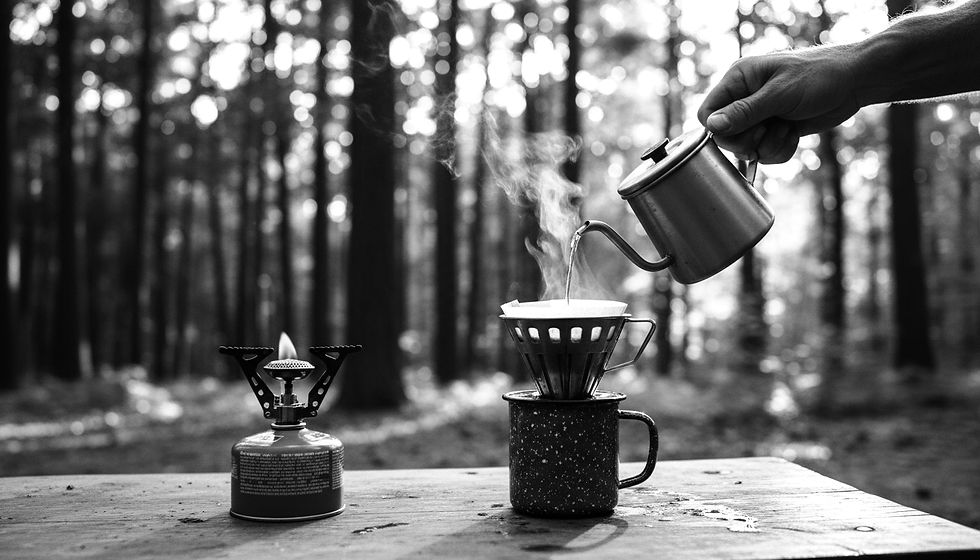
Pack the essential camping coffee gear
Great camp coffee does not require a huge kit. Start with the basics, then add gear based on how much comfort you want.
A reliable setup includes:
Coffee
Brewer
Mug
Heat source
Kettle or small pot
Water
Spoon or stirrer
Filters if needed
Airtight storage
Waste bag for grounds and filters
For backpacking, trim the kit down. A titanium mug, instant packets, or coffee bags may be enough. For car camping, bring the good stuff: whole beans, hand grinder, pour-over cone, scale if desired, and a sturdy kettle.
A few small upgrades make a big difference.
A hand grinder
Fresh grinding improves aroma and flavor. Choose one with a secure lid and a body that fits inside your mug or cook pot.
A dedicated coffee container
Use a lightweight, airtight container. Resealable bags work, but they puncture more easily. A compact screw-top container protects beans from moisture and camp box chaos.
A wide, stable mug
Tall narrow mugs tip more easily on rocks and uneven tables. A low, wide mug is less dramatic when someone reaches across breakfast.
A cleanup plan
Coffee grounds can attract animals and create a mess. Pack out used filters and grounds when needed. If you are in a developed campground, use the provided trash system.
Store coffee so it survives the outdoors
Camp storage is not just about freshness. It is also about keeping coffee dry, clean, and away from animals.
Keep coffee sealed between uses. Store it with your food, not loose in a backpack pocket. In bear country, follow local food storage rules and use the required bear canister, locker, or hang system. Coffee smells like food to wildlife.
Avoid clear containers left in sun. Heat can dull flavor, and condensation can ruin grounds. If rain is likely, double-bag pre-ground coffee or use a hard-sided container.
For group trips, portion coffee by day. This keeps the main supply sealed and makes mornings easier. One small bag per morning also prevents the classic problem of someone using half the coffee on day one.
How to build your perfect camp coffee plan
Before a trip, answer a few simple questions.
How far are you carrying it?
If the answer is miles, go lighter. Instant coffee, coffee bags, or a compact press make sense. If the answer is from the trunk to the picnic table, bring the grinder.
How many people need coffee?
Solo coffee can be simple. Group coffee needs volume. French press, large pour-over setups, or a camp percolator can help when several mugs need filling.
How much cleanup can you handle?
Wet grounds are messy. Paper filters make cleanup easier. Instant coffee leaves almost no waste beyond the packet.
How much flavor do you want?
For the freshest taste, bring whole beans and grind at camp. For convenience, bring pre-ground coffee. For speed, bring instant.
A good middle-ground kit for most campers looks like this:
Fresh medium roast whole beans
Small hand grinder
Lightweight pour-over cone
Paper filters
Camp kettle
Airtight container
Favorite mug
That setup gives strong flavor without much bulk. It also works for relaxed mornings and quick starts.

A simple fresh roast recipe for camp
This recipe works with a pour-over cone, fresh medium roast coffee, and a standard camp mug.
Use about two tablespoons of coffee for each six ounces of water. If you like stronger coffee, add a little more. Grind to a medium texture, similar to coarse sand.
Heat water until it is just off the boil. If you do not have a thermometer, let boiling water sit briefly before pouring.
Place the filter in the cone and wet it with a little hot water. Add the coffee. Pour just enough water to wet the grounds, then wait for the coffee to bloom. After that, pour slowly in small circles until the mug is full.
The result should smell sweet and rounded, with no dusty or stale edge. If it tastes sour, grind finer or brew longer next time. If it tastes bitter, grind coarser or use slightly less coffee.
The best coffee is the one that fits the trail
Freshly roasted coffee gives you the best chance at a flavorful cup outdoors, especially when you can bring whole beans and grind them at camp. That said, the smartest coffee choice is the one that fits the trip. A summit sunrise may call for instant. A lazy lakeside morning may deserve a French press. A rainy tent vestibule may make coffee bags feel brilliant.
Start with fresh coffee, choose a roast you enjoy, and match the brewing method to the adventure. Keep the gear simple, pack the coffee well, and plan for cleanup before the first cup is brewed.
When the morning air is cold and the stove finally hisses to life, good coffee feels like more than a drink. It becomes part of the trip.


Comments